

Owen is two, and everything he picks up goes into his mouth first and gets inspected second. My daughter says he is part raccoon. So when I choose a toy to keep at our house, I am really asking two questions. Is there any piece small enough to swallow, and will he still be playing with it in twenty minutes? The Melissa & Doug Rainbow Stacker has answered both for a year now.
Ours lives on the low shelf in the spare bedroom, the one we set up for the grandkids. Ellie is seven and Mason is five, so this house is rarely quiet. The stacker comes down most weekends anyway. I bought it because it was wood and had no battery compartment. I kept it because of what I watched Owen do with it. Ten reasons, and they are not in order of importance.
The toy that survives a tile floor and a two-year-old
Seven wooden rings, a topper piece and a rocking base. No batteries, no screens, nothing that snaps off in a mouth. Ages 18 months to 3 years.
Amazon Check Today's Price on Amazon →Seven rings is the right count, not twelve
Most stacking toys I see now come with ten or twelve rings. That sounds like more value. It is not. Once the rings reach the smallest sizes, a two-year-old cannot tell them apart, so he stops sorting and starts scattering. Seven rings give him clear steps, big to small, and he can finish the whole stack before his attention runs out. The listing names color recognition as the aim, and seven pieces is enough to practice naming colors without it turning into a lesson.
The size gaps are wide enough for a toddler to see
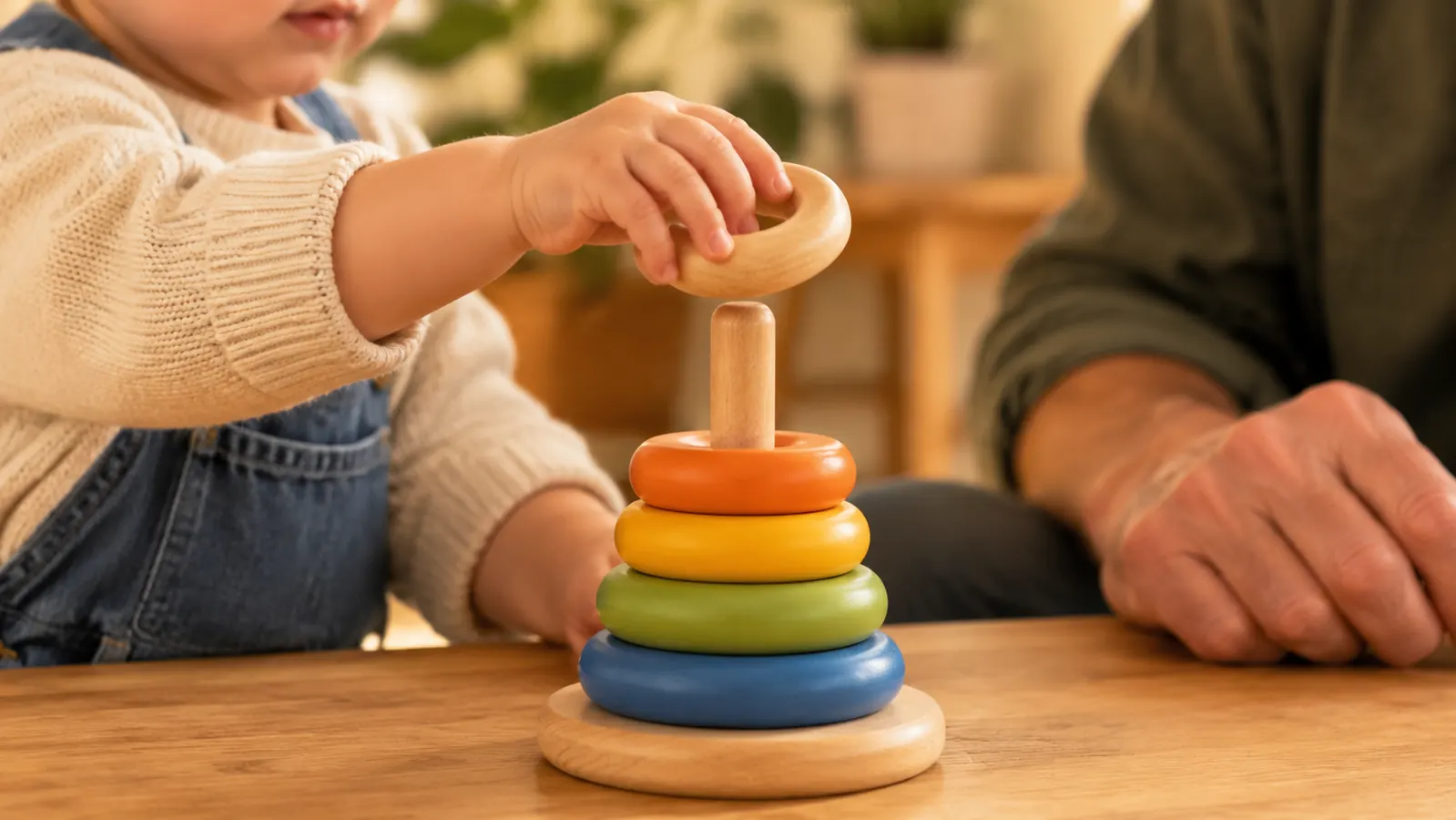
A good stacking toy has to be obvious. If two rings look nearly the same, the child is guessing. The rings on this one step down in a way Owen can spot from arm's length, which means he corrects himself without me saying a word. He puts a big ring on top of a small one, it looks wrong to him, he moves it. That is the whole learning loop and it takes about four seconds. The listing bullets mention early shape, color and size differentiation, and wide steps are what deliver it.
The rod is solid wood, so nothing bends or leans
Cheaper stackers use a thin dowel that flexes. A flexing rod teaches a child that the tower is allowed to lean, and then the tower falls and everyone is upset. The Melissa & Doug stacker has a solid wood rod set into a wooden base, and it does not give. When Owen pushes a ring down, the ring goes down. When he misses the rod, he misses it cleanly and tries again. Small thing. It is the difference between a toy he plays with and a toy he throws.
The rocking base turns a wobbly push into a game
The base rocks. That was not a feature I expected to matter, and it turned out to be the one Owen uses most. He stacks three rings and then rocks the whole thing just to hear them settle. It gives a two-year-old something to do with the toy besides stacking, which matters, because stacking has an ending and rocking does not. It is the reason he comes back to it between other toys instead of leaving it on the floor.
There is no battery door to check
I spent thirty-four years as a labor and delivery nurse, and I still check battery compartments on anything that comes into this house. Screws work loose. Plastic tabs snap. A toy that runs on nothing removes the whole question. This one is manual, no batteries required, nothing to charge and nothing that dies halfway through play and starts a meltdown. It also never gets louder. After a weekend with three grandchildren, I notice that more than I used to.
It weighs 0.36 kg, so Owen can carry it himself
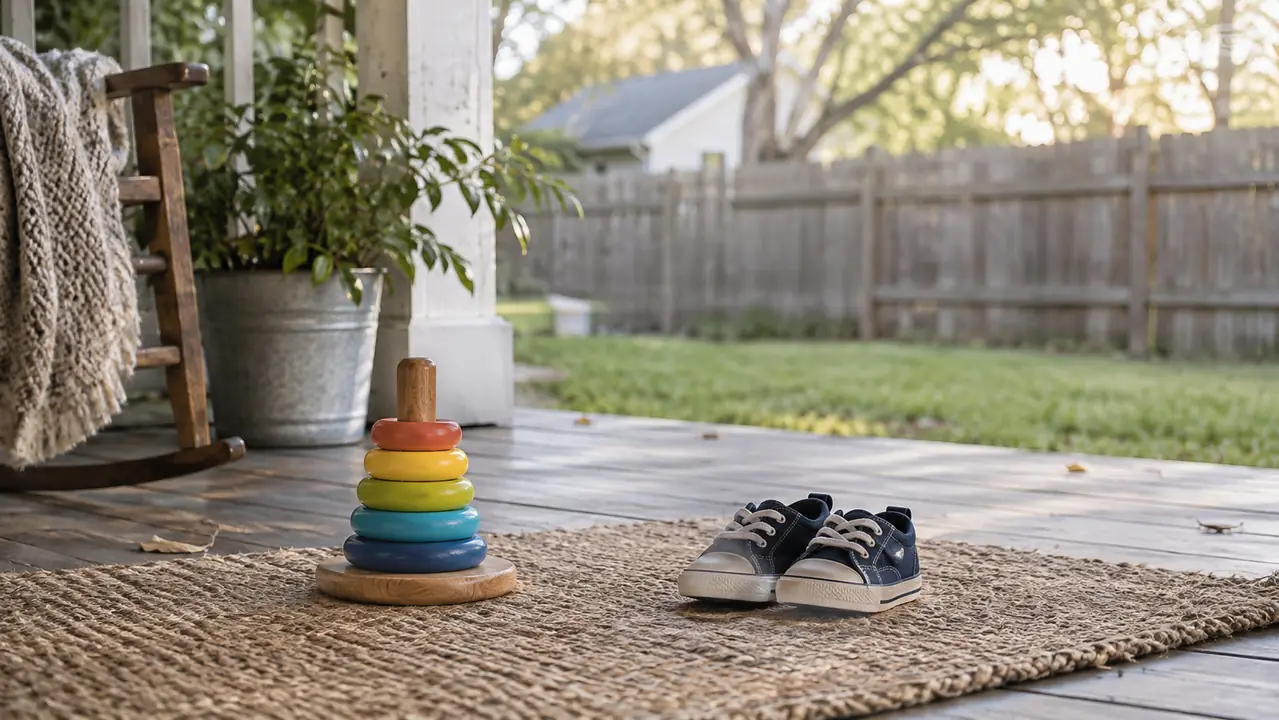
The whole thing weighs 0.36 kg. That is light enough for a two-year-old to pick up in one hand and haul wherever he wants it, which is usually the kitchen floor while I am cooking. Independence matters at this age. A toy he can fetch, carry and put away on his own gets used. A toy that only an adult can move ends up on a shelf and stays there. Ours has never stayed on the shelf.
Cleanup is a job he can actually finish
Putting it away is the same motion as playing with it. Seven rings go back on one rod, the topper goes on last, done. Owen can clear the whole thing in under a minute and he does it without being asked, because the toy tells him what to do next. That is not true of a bucket of blocks, which is why the blocks in this house live in a bin under the window and the stacker lives on the shelf where he can reach it.
It takes being sat on, dropped and chewed
Wood does not crack the way thin plastic does. Ours has been sat on, dropped off the porch and chewed on the topper by a child cutting molars. The finish has held. I check it every few weeks for splinters and rough spots, the same way I check anything wooden in this house, and I have not found any. That is the honest version. It is not indestructible, but it has survived a full year of Owen.
The topper gives the stack a finish line
There is a topper piece that fits only on the top, and that one piece is what turns stacking into a task with an ending. Owen knows the tower is finished when the topper is on. He announces it. He claps for himself, every time. Anyone who has tried to interest a two-year-old in a toy with no clear ending knows why this matters. The other stacking rings we have owned just stop. This one concludes.
It keeps working after the age label runs out
The label says 18 months to 3 years, and that is accurate for stacking. But Ellie at seven and Mason at five still use the rings. They set them out as plates for their toy animals. They count them. They hide them under cushions and make me find them. The Melissa & Doug stacker has outlasted its own age range at our house, which is more than I can say for the light-up toys in the spare room.
What I'd Skip
I would skip the larger stacking sets with ten or twelve rings, and I would skip anything with painted pegs where the paint already looks chipped in the product photos. I would also skip anything with a button that plays music, because a toy like that gets played with twice and then ignored. And I would skip the idea that this is a toy a child plays with alone while you cook. The rod is a rod. A two-year-old who falls onto it will cry, and I would not leave a child that age on the floor with it unattended. Owen plays with ours on the rug while I am in the same room. That is the honest limit. If you need something a child can be alone with in the next room, plain wooden blocks are the better call, and I say that as someone who owns both. The Melissa & Doug stacker is the one I reach for when I am sitting down with him, and that is the highest compliment I can give a toy.
He puts a big ring on top of a small one, it looks wrong to him, he moves it. That is the whole learning loop and it takes about four seconds.
Seven rings, one rod, and a year of weekends already proven
The wooden stacker that outlasted its own age label at our house. Ages 18 months to 3 years. Nothing to charge, nothing to snap off.
Amazon Check Today's Price on Amazon →